
Since the late 1990s, public agencies across the US have increasingly relied upon the use of collaborative project delivery methods, commonly referred to as alternative project delivery methods (APDMs), to deliver construction projects. While agencies have realized many benefits from implementing APDM, there remains an ongoing basic misunderstanding about these methods and their application, affecting experienced users and newcomers to APDM alike. The basic principle many agencies miss is that there is an overarching project delivery strategy comprising three key components, and that delivery method is only one of these. To truly use any of the delivery methods effectively, an agency must make a decision about each of these components—delivery method, procurement approach, and contract type—which combined make up the project delivery strategy for each construction project. This process gets more complicated by the proliferation of new names for each twist on a delivery method or procurement approach, as well as for different management strategies that masquerade as delivery methods. Attendees in this session will learn the differences between delivery methods, delivery strategies, contract management strategies, and more, allowing them and their agencies to use these collaborative project delivery methods more successfully to deliver their design and construction program.
After this session, participants will be better able to:
• Differentiate between the basic project delivery methods and how to select the best one for each specific project.
• Identify the different procurement approaches available for each delivery method and the differences between them.
• Compare the different contract types available for each delivery method and which best applies to each delivery method based on the project being delivered.
Contributor/Source
Jeffrey Kramer-Partner, VP, Program & Project Management Division Director
Claim CEUs
Submit this form to claim CEUs.
Related Resources
Proficiency Levels
Introductory
Focuses on a general or broad overview of the topic, awareness of basic factual recall. Limited experience of the subject matter is necessary to understand content areas.
Applied
Focuses on practical implementation of technical steps or strategies, some prior knowledge and experience of the topic is necessary.
Advanced
Mastery of basic concepts associated with an area has been obtained. Focuses on understanding nuances, advanced concepts, and intricacies with implementation within knowledge area. Strong understanding of how the concept impacts other factors or areas of operations.
Program Types
CLL
Click, Listen & Learn (CLL) are interactive educational webinars. Each program is led by top experts in the field who share new ideas, methods, and technologies in a fast-paced two-hour time frame. These programs are available free to APWA members. CLL programs are eligible for continuing education units (CEUs).
Primer
Primers are used to educate policymakers about public works roles and responsibilities in public rights of way, the impact of federal workforce development policies on the industry and workforce, and the importance of resilient infrastructure.
Public Works Radio Podcast
Public Works Radio is the official podcast of the American Public Works Association (APWA), bringing the stories behind our communities to life. This podcast shines a spotlight on the people and projects that keep our cities running—humanizing the work and the professionals who make it happen. Each episode dives into a wide range of topics designed to educate and inspire, making public works more visible to everyone.
PWX
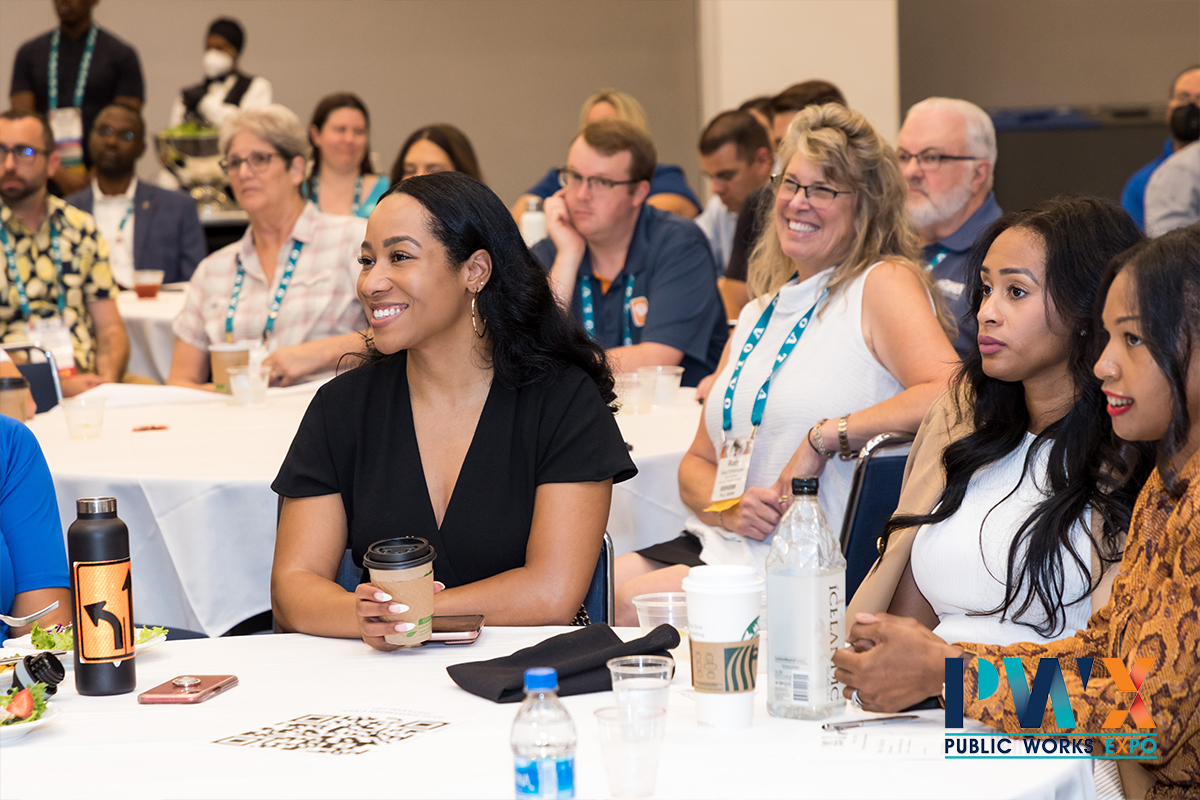
PWX session recordings cover a wide variety of topics, including integrating modes of transportation, traffic and transit, construction management, emergency management, engineering and technology, fleet and facilities, management, parks and grounds, snow and ice control, and stormwater/flood control, as well as solid waste, roads and bridges and water/wastewater. PWX sessions are eligible for continuing education units (CEUs).
Reporter Articles
APWA Reporter articles are written by public works practitioners on subjects such as solid waste management, water resources, municipal engineering, transportation, equipment services, buildings and grounds, snow removal, and other public works-related topics.
Snow
The Snow Conference session recordings feature public works professionals sharing the latest best practices in managing winter/snow operations more successfully, taking advantage of emerging technologies, understanding and preparing for the challenges ahead, and providing better service to their communities. Snow sessions are eligible for continuing education units (CEUs).
Tech Boxes
A tech box is a PDF take-away that provides information in lists, steps, or defined areas specifically focused on trending technologies.
Virtual Program
Virtual programs are live, interactive educational programs led by top experts in the field who provide timely information or address trending topics within an area. Programs often conclude with an open forum for Q&A.